Difference Between Bim And 3d Modelling
Difference Between BIM and 3D Modelling
What is BIM?
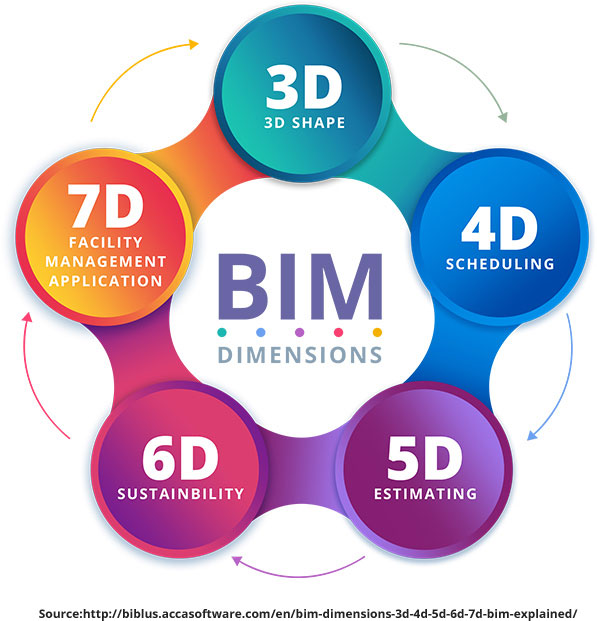
Building Information Modelling (BIM) is an intelligent 3D model-based process that equips architecture, engineering, and construction (AEC) professionals with the insight and tools to more efficiently plan, design, construct, and manage buildings and infrastructure. BIM uses 3D models of buildings and other structures, data associated with them, and a platform that can be used to share information among different stakeholders throughout the entire lifecycle of a building. As a form of digital representation, BIM models provide a comprehensive view of the physical and functional characteristics of a structure and allow the various stakeholders to interact with the structure in a virtual environment.
What is 3D Modeling?
3D modelling is the process of creating a three-dimensional representation of a physical object. It involves creating a digital model of an object in 3D space which can then be manipulated and used in a variety of ways. 3D models are used in a variety of industries, including gaming, animation, film and television, engineering, architecture, and manufacturing. They can be used to create realistic renderings of physical objects and also to simulate physical processes such as motion and physics.
Difference between BIM and 3D Modeling
The main difference between BIM and 3D modelling is that BIM is a process that uses 3D models to capture and manage the data associated with a building or other structure, while 3D modelling is the process of creating a three-dimensional representation of an object. While 3D models can be used in the BIM process, they are not the same thing. 3D modelling is the process of creating a digital model of an object, while BIM is the process of using 3D models to capture and manage data associated with the object.
BIM vs 3D Modeling: 3D Modeling is the process of creating a 3D representation of an object while BIM is the process of using 3D models to capture and manage the data associated with the object.
Advantages of BIM
One of the main advantages of BIM is that it enables a more efficient and collaborative workflow between different stakeholders. With BIM, all of the data associated with a building or other structure is stored in a central location, allowing stakeholders to easily access and share information. This helps to reduce the time and cost associated with design and construction, as well as helping to ensure that all stakeholders are working from the same set of data. In addition, BIM enables a more efficient design process, as changes to the design can be quickly and easily implemented.
Advantages of 3D Modeling
3D modelling has its own set of advantages. It provides a realistic representation of an object, allowing designers to explore different design possibilities. 3D modelling is also an efficient way to create prototypes, as designs can be quickly and easily tested and iterated upon. In addition, 3D models can be used in animation, gaming, and film and television, providing a more immersive and realistic experience.
Conclusion
BIM and 3D modelling are both powerful tools for the architecture, engineering, and construction (AEC) industry. While they are similar in some ways, they are also distinct. BIM is a process that uses 3D models to capture and manage the data associated with a building or other structure, while 3D modelling is the process of creating a three-dimensional representation of an object. Each has its own set of advantages and can be used in different ways to improve the design and construction process.
